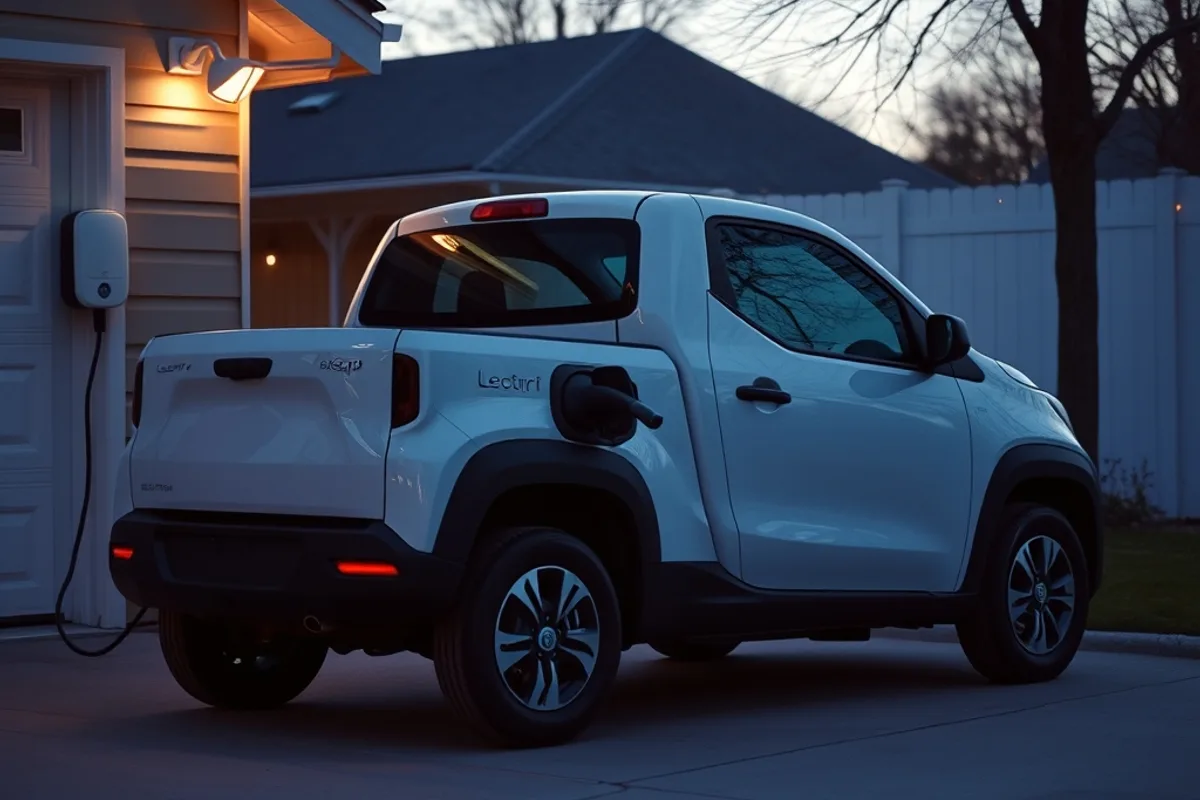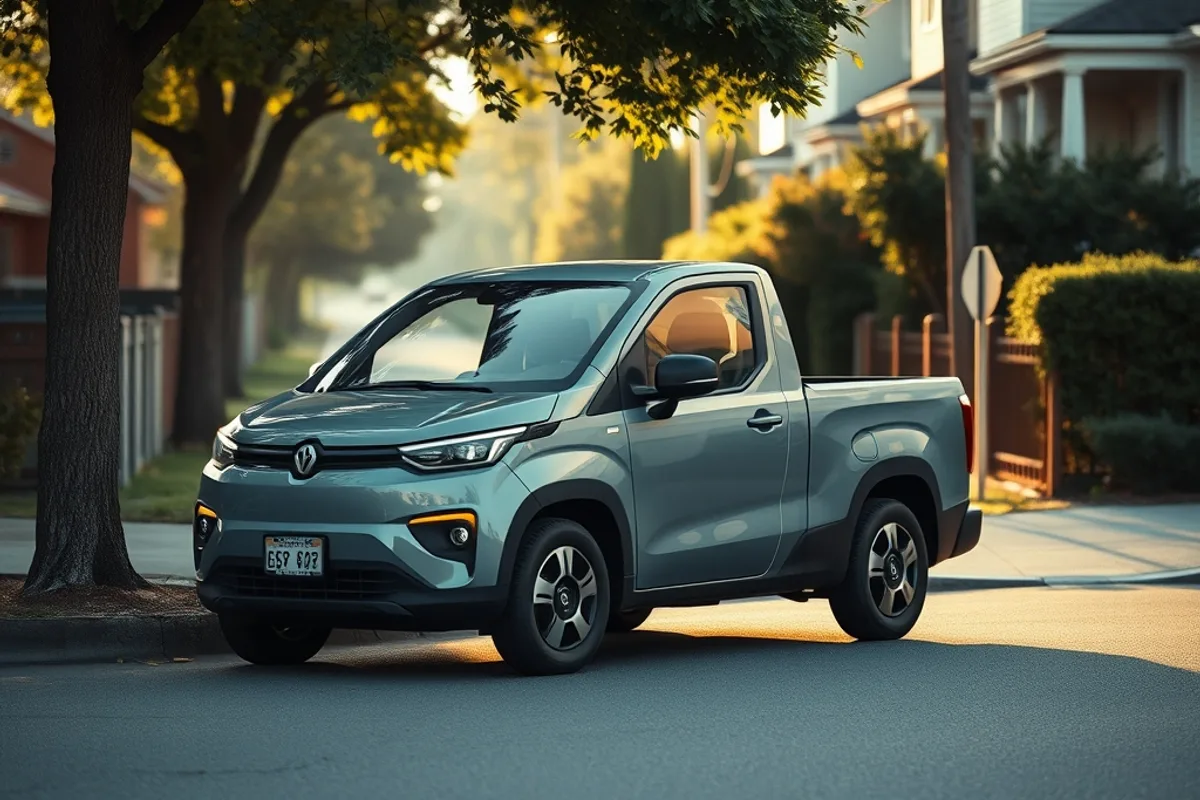
For years, the electric pickup conversation was about huge trucks with huge batteries and huge prices. A quieter segment is now arriving: compact electric haulers built for a shorter bed and a tighter budget.
The pitch is straightforward. Most truck owners do not tow a trailer every day. They carry tools, furniture, bikes and garden waste, and they value a bed that stays open to the weather. A compact electric truck can do that job without a 100 kWh battery or a six-figure sticker price.
What is actually coming to market
Several makers have shown compact electric pickups for the 2026 and 2027 model years, most of them aimed at small businesses and suburban households. Their dimensions vary, but the pattern is consistent: a bed of roughly 1.2 to 1.5 metres, a payload around 500 to 700 kilograms, and a towing capacity that is modest by full-size standards.
Those numbers will disappoint anyone who needs to pull a horse trailer. They are perfectly adequate for a landscape crew, a delivery route or a homeowner hauling lumber. The question is whether the market has room for a truck that is honest about being small.
Range in the real world
Manufacturers are quoting range figures in the 250 to 350 kilometre band, depending on battery size. In cold weather, with a loaded bed and a heater running, expect a meaningful reduction. That is true of every electric vehicle, and it matters more in a work truck that may spend a winter day idling between jobs.
For a local contractor, the daily loop is often under 150 kilometres, and the truck returns to a depot or driveway where it can charge overnight. That is the use case the segment is built around. For a sales rep covering three states, a compact electric truck is the wrong tool, and no amount of marketing will change that.
The right question is not how far the truck can go on one charge. It is whether it can finish the day's route and start tomorrow full.
The payload penalty
Batteries are heavy. A compact electric truck carries several hundred kilograms of cells, which eats into the payload budget before a single bag of cement goes in the bed. Makers compensate with stiffer springs and higher-rated tyres, but physics does not negotiate.
Buyers should compare the payload sticker, not the brochure's best-case number. A truck rated at 600 kilograms may be down to 450 once a driver, a passenger and a toolbox are aboard. For many small jobs that is still enough. For a two-person crew carrying a full load of tile, it may not be.

Charging at a job site
This is the practical bottleneck. A homeowner with a driveway can install a Level 2 charger and wake up to a full battery. A contractor parking on a city street cannot. Public fast charging is improving, but it is expensive and not designed for a truck that is also carrying tools.
Some fleets are solving this with depot charging and route planning. Others are waiting for cheaper, higher-capacity batteries or for vehicle-to-load systems that let the truck power tools on site. The latter is genuinely useful and increasingly common, though it adds cost and complexity.
Price and the used market
Compact electric trucks still carry a premium over comparable petrol models, though the gap is narrowing as battery prices fall. The total cost of ownership depends on local electricity prices, maintenance savings and how long the owner keeps the vehicle. Brake wear is lower, but tyres wear faster because of the extra weight and instant torque.
The used market is the wild card. Early electric trucks have not been around long enough to establish reliable residual values. Buyers who plan to sell after three years should assume more uncertainty than they would with a conventional pickup.
Key facts
- Compact electric pickups typically offer 250-350 km of quoted range.
- Cold weather and a loaded bed reduce that figure noticeably.
- Payload is limited by battery weight; check the sticker, not the brochure.
- Home or depot charging is the difference between useful and inconvenient.
- Resale values are still unproven for the segment.
Who should buy one
If your driving is local, your loads are moderate and you can charge where you park, a compact electric truck is a sensible tool. If you tow heavy trailers, cover long rural routes or park on the street, wait for the next generation of batteries or choose a different vehicle.
The bottom line
The small electric truck is not a compromise version of a full-size pickup. It is a different product for a different job. The segment will succeed if makers resist the urge to inflate it, and if buyers judge it by the work it does rather than the size it projects.
For the other side of the ownership decision, see what it really costs to keep an older car on the road.