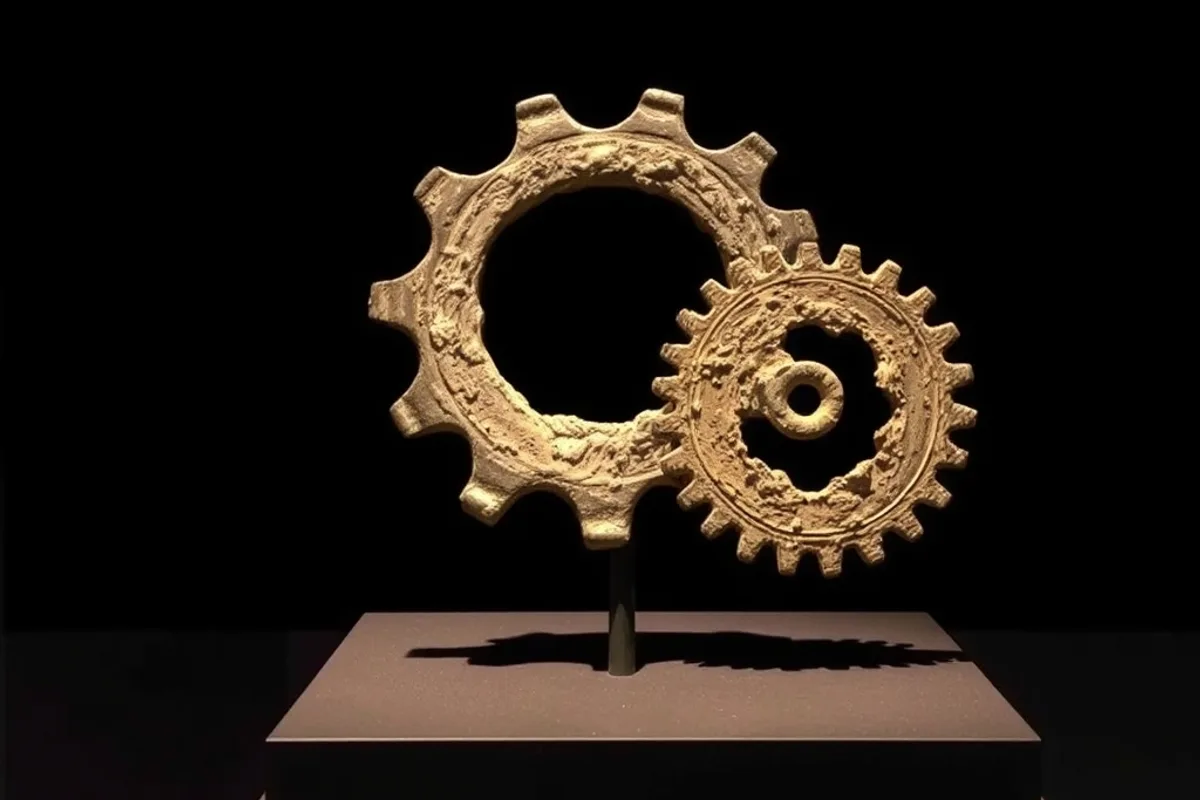
In 1901, sponge divers brought up a lump of corroded bronze from a Roman-era shipwreck near the Greek island of Antikythera. It looked like debris. It turned out to be the most sophisticated geared object surviving from the ancient world.
More than a century of research has revealed a machine that tracked the sun, the moon and probably the planets, predicted eclipses and marked the dates of athletic games. It is a remarkable achievement. It is also a fragment, and the fragments are why the argument continues.
What the machine was
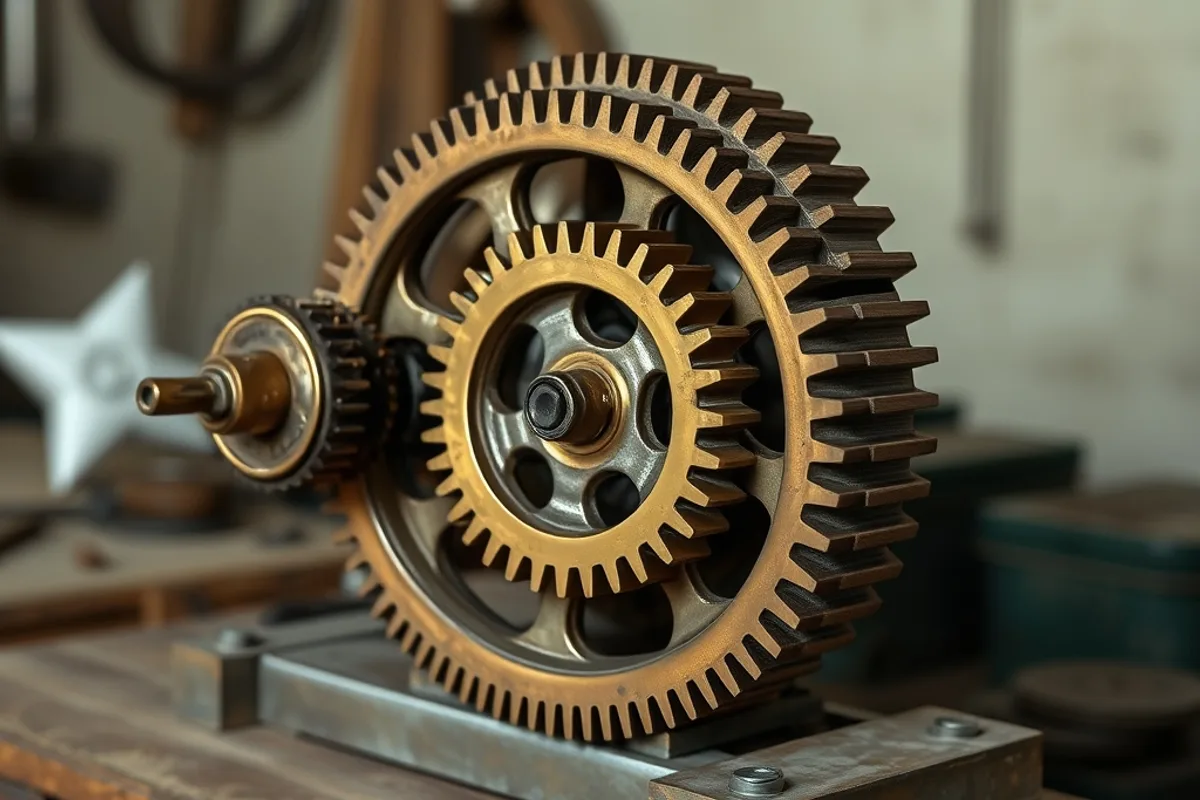
The Antikythera Mechanism was a hand-powered device housed in a wooden case. Bronze gears turned pointers on dials, modelling the positions of celestial bodies. The front dial showed the zodiac and the date; the back dials tracked lunar months and eclipse cycles.
The gearing was not a simple ratio. It included a pin-and-slot arrangement that approximated the moon's varying speed, a detail that suggests careful observation and a sophisticated mathematical model. Nothing comparable survives from the ancient world.
How imaging changed the picture
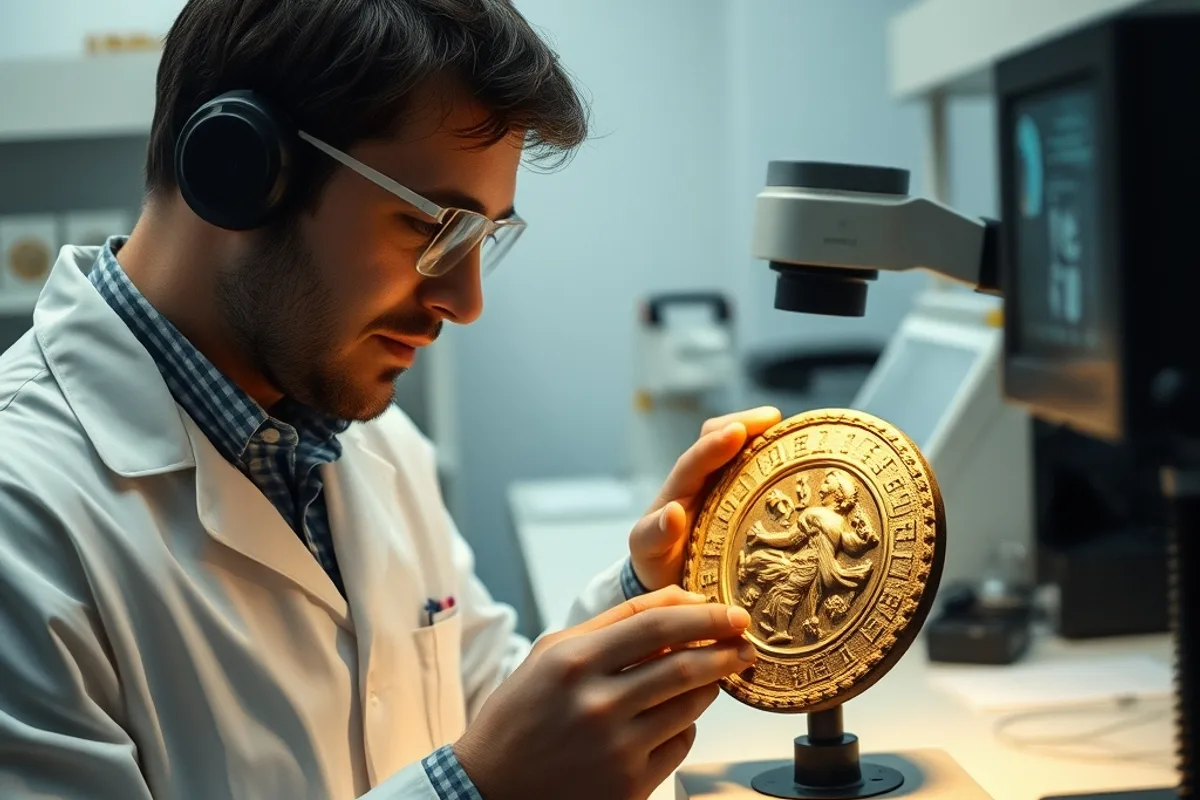
For decades, researchers relied on X-rays and careful physical examination. In the 2000s, a collaboration used computed tomography and reflectance imaging to read inscriptions hidden inside the corroded metal. Thousands of characters became legible, including a user's guide and references to the motions of the planets.
The inscriptions confirmed that the machine was not a toy or a status object alone. It was a working model of the cosmos, with instructions for use. The text also revealed a calendar that linked the heavens to civic and religious life.
The mechanism is not a lost technology in the sense of a secret. It is a lost practice: the skill to build it existed, and then the tradition that carried it disappeared.
What remains unread
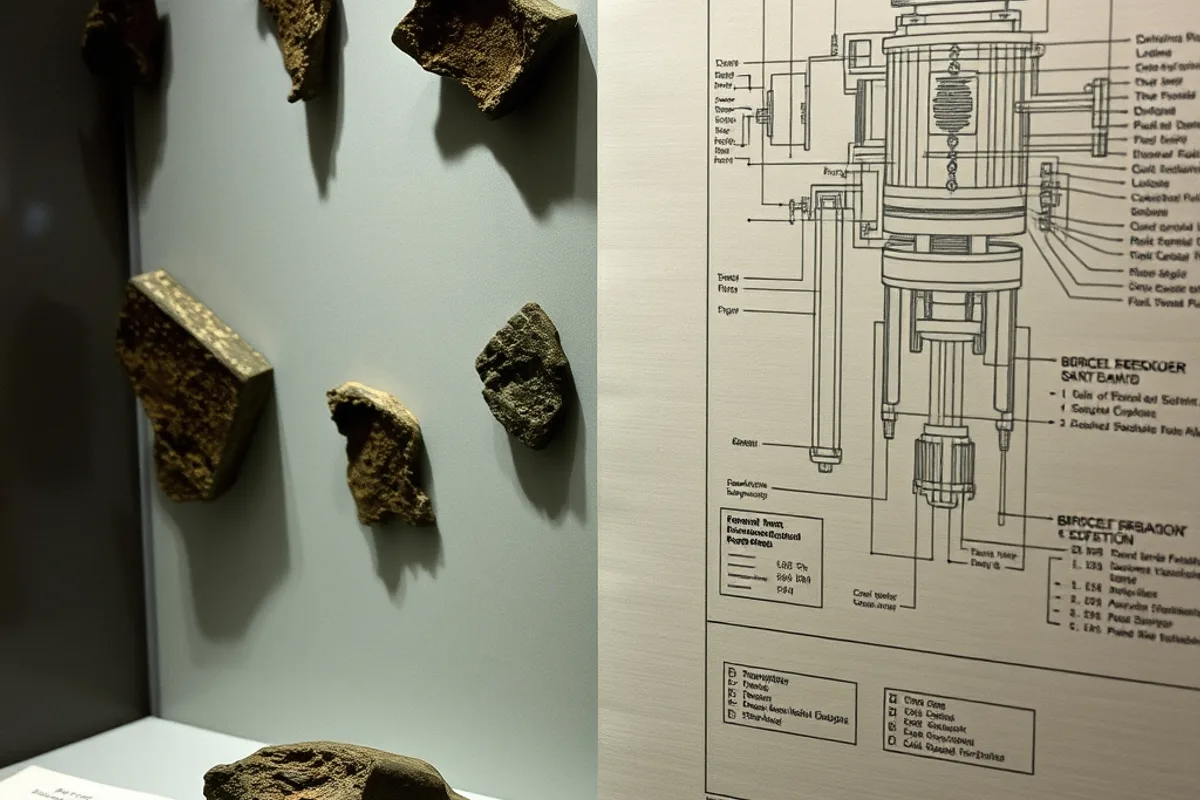
Large sections of the device are missing. The surviving fragments preserve perhaps a third of the original structure, and many gear teeth are worn or corroded. The planetary display is the least understood part, because the relevant fragments are few and the gearing is complex.
There is also the question of authorship and purpose. Was it built for a school, a temple, a wealthy patron or a ruler? The inscriptions hint at a public or educational function, but the evidence is indirect. No ancient source describes this specific machine.
Why it did not lead to an industrial revolution
A common question is why a society that could build such a device did not go on to build engines and factories. The answer is not that the ancients were uncreative. It is that the machine served a specific purpose, used expensive materials and skilled labour, and depended on a narrow tradition of mathematical craft.
Knowledge in the ancient world was often personal and localized. A workshop could train an apprentice, but a technique could disappear with a patron's death or a city's decline. The mechanism is a reminder that technological progress is not automatic. It has to be transmitted.
What new research could still find
Further imaging may recover more of the inscriptions, especially from fragments that have not been re-examined with current instruments. Underwater archaeology at the wreck site could produce new pieces, though the site has been disturbed by earlier expeditions and by looters.
A better understanding of the planetary gearing would settle several reconstructions that currently compete. It would also clarify whether the machine modelled the planets with epicyclic gears or with a simpler approximation.
Key facts
- The mechanism dates to roughly the second century BC.
- It used bronze gears to model the sun, moon and likely the planets.
- CT imaging revealed thousands of hidden characters.
- Only about a third of the original structure survives.
- The planetary display remains the least understood section.
Why it still matters
The mechanism is not important because it predicts the future or proves a lost civilisation. It matters because it shows what careful observation and craft can achieve without modern power. It also shows how fragile knowledge can be when it lives in a few hands.
The bottom line
The Antikythera Mechanism is a fragment of a lost practice, not a secret code. We know more about it than ever, and we still cannot read all of it. That is not a failure of research. It is the honest condition of history: the evidence is partial, and the best answers are the ones that admit it.
For another story where the record and the legend diverge, read the vanished keepers of Eilean Mor.